
Phosphorus Management in Potatoes: Year Two of the NDSU Trial
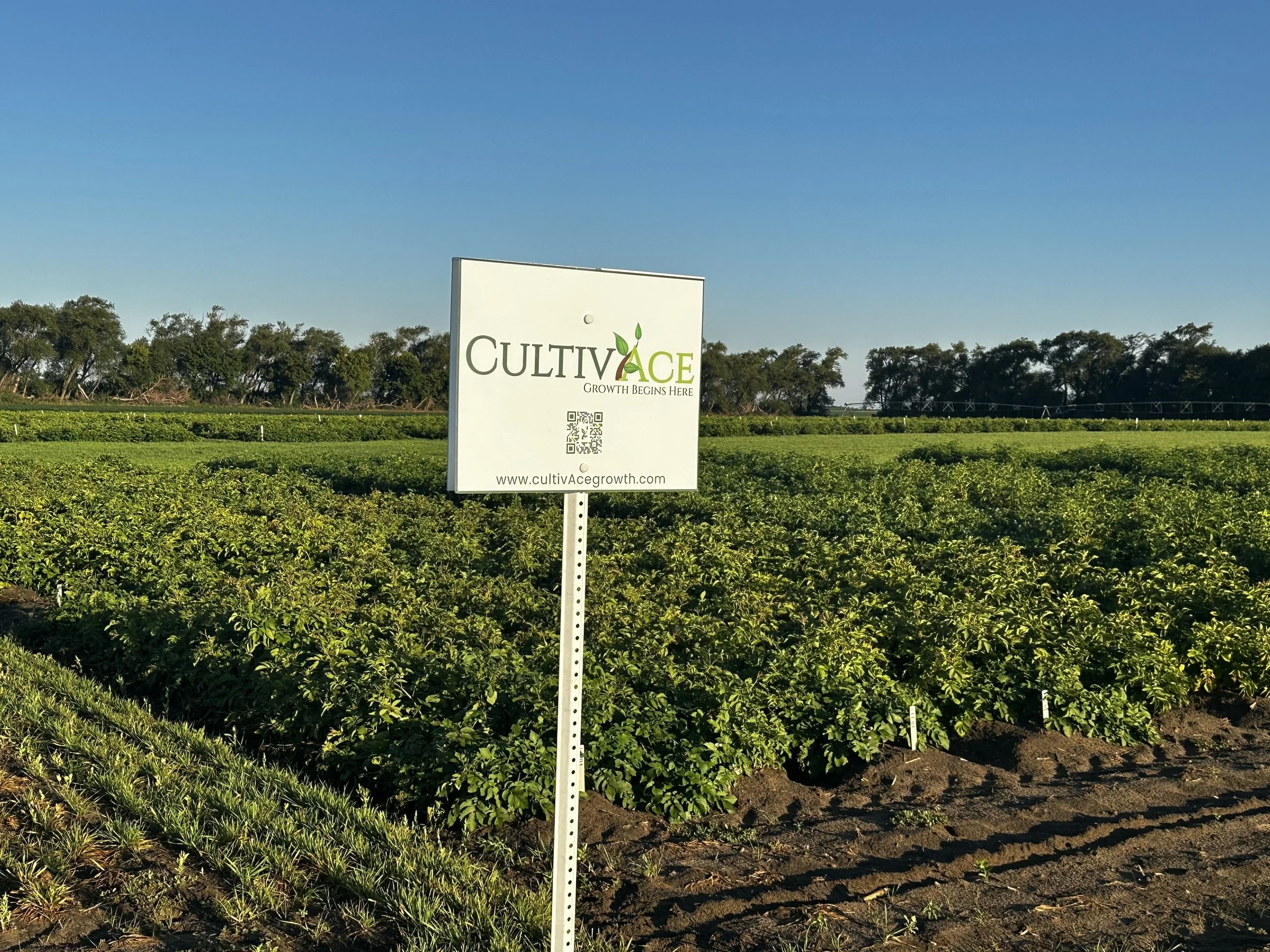
Most conversations about phosphorus fertilizer management happen in a corn field. Row spacing, planter setups, starter placement, it's all built around row crops. Potatoes rarely get the same attention, even though phosphorus availability affects them just as directly. Tuber set, bulking, and sizing all depend on the plant getting usable phosphorus at the right window, not just phosphorus on the label.

That gap is part of why CultivAce partnered with North Dakota State University's Department of Plant Sciences on an in-furrow potato trial at Inkster, North Dakota, now entering its second year. The trial compares two programs applied in-furrow at planting: a standard 10-34-0 program at 20 gallons per acre against just 6 gallons per acre of 8-24-0 starter fertilizer formulated with PFM™ Technology, across three varieties: Dakota Gold, Dakota Skarlagen, and Red Norland.
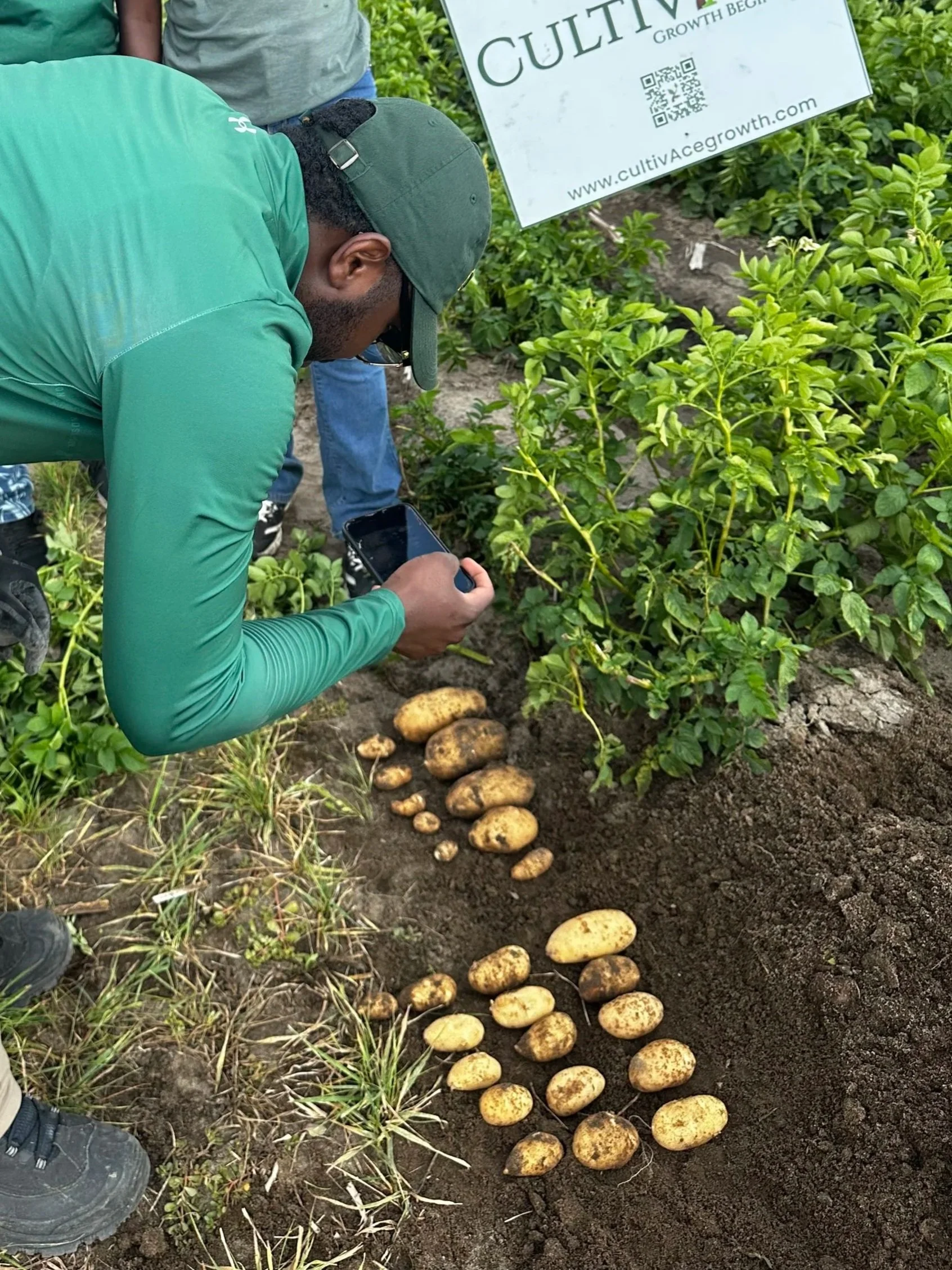
NDSU Plant Sciences staff evaluating the 2026 dig
What the 2025 Trial Showed
The results were consistent across all three varieties. Dakota Gold reached 249 cwt/acre of US No. 1 yield with the PFM™ treatment, compared to 222 cwt/acre for the grower standard, a 12.2 percent increase in marketable yield. Dakota Skarlagen came in at 214 cwt/acre versus 201 cwt/acre, a 6.5 percent gain. Red Norland showed the largest relative jump, at 192 cwt/acre versus 172 cwt/acre, an 11.6 percent increase in marketable yield.
Three varieties, three positive results, all in the same direction. That consistency is exactly what a multi-year field trial is designed to build toward: not a single standout number, but a repeatable pattern across different genetics and growing habits. It's the same approach behind CultivAce's other fertilizer trials, where results are tracked across seasons and locations rather than judged on one field in one year.
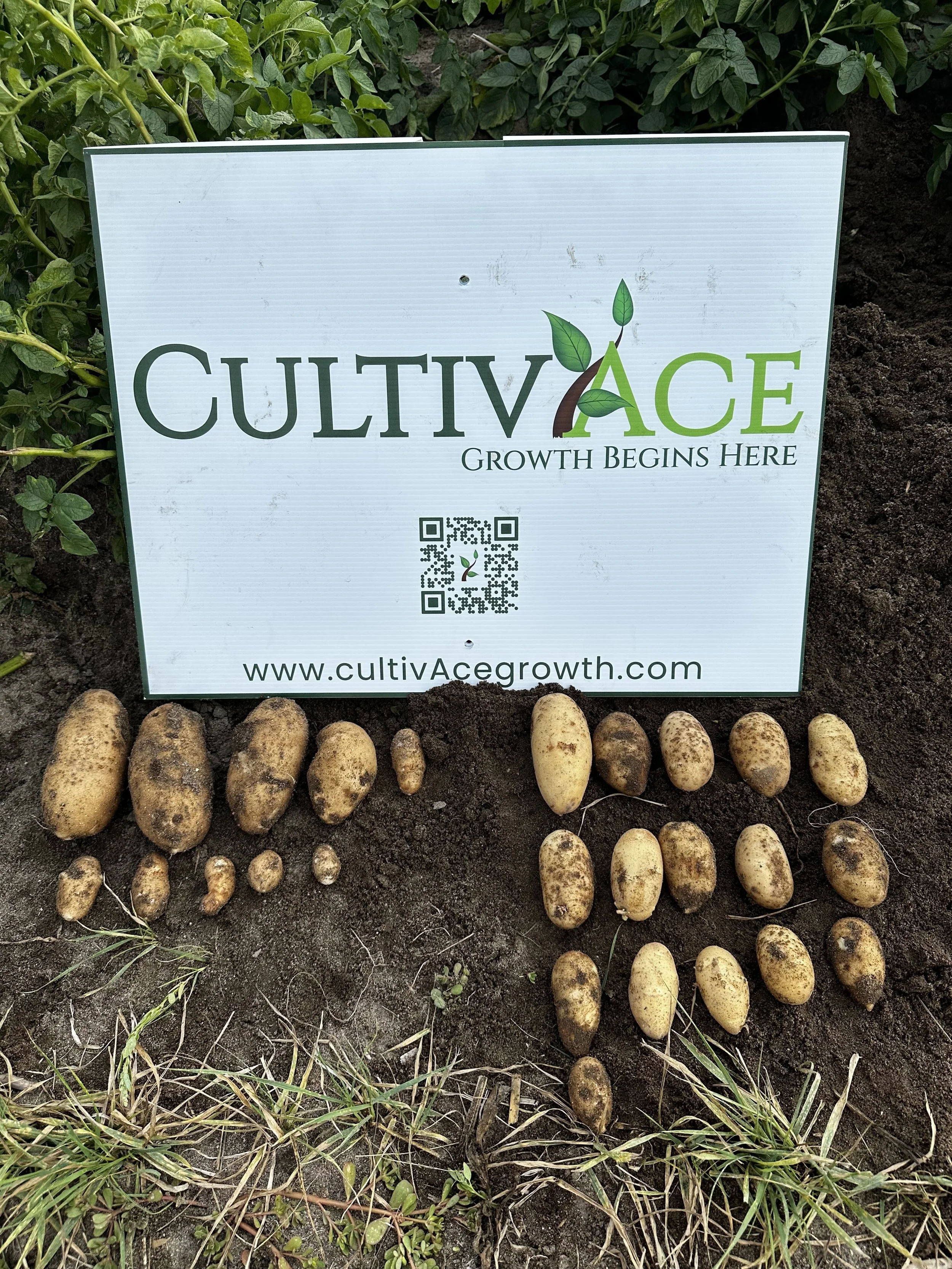
Dakota Gold, 2026 dig. PFM™ treatment on the right
Why Liquid Phosphorus Fertilizer Behaves Differently Depending on Form
Most liquid phosphorus fertilizer programs rely on polyphosphate blends. Polyphosphate isn't immediately usable by the plant. It has to convert to orthophosphate first, a process that depends on soil microbial activity, temperature, and moisture. In cool spring soils, common at planting across the Upper Midwest, that conversion lags, and the plant doesn't get the phosphorus it needs when it needs it most.
Dakota Skarlagen, 2026 dig. PFM™ treatment on the right.
That lag is part of why a standard 10-34-0 program is often applied at higher volume, more product to compensate for what won't convert or stay available in time. PFM™ Technology is built around 100 percent orthophosphate from the start, removing that conversion step entirely. It's also formulated to resist fixation, the process where phosphate binds to calcium, iron, or aluminum in the soil and becomes locked out of the root zone. That combination is the mechanism behind the yield gains at Inkster at a fraction of the applied rate: more of the phosphorus that goes into the furrow stays available to the plant, through tuber set and into bulking. It's the same mechanism explained in more depth in “You're Not Short on Phosphorus. You're Short on Available Phosphorus.”, which covers why availability, not just application rate, is the real lever growers can pull.
What the Dig Photos Are Showing
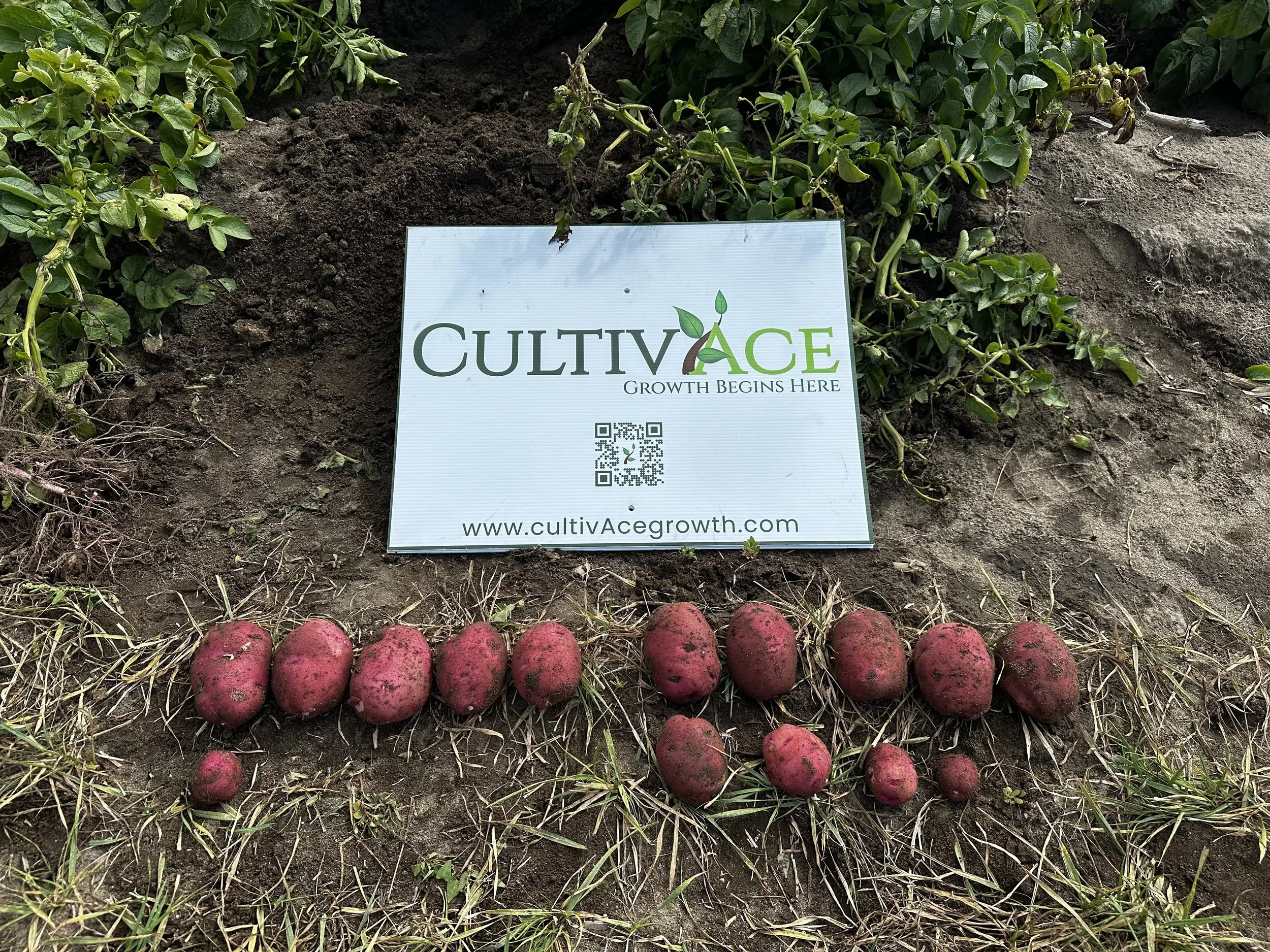
Dakota Skarlagen, 2026 dig, second view. PFM™ treatment on the right
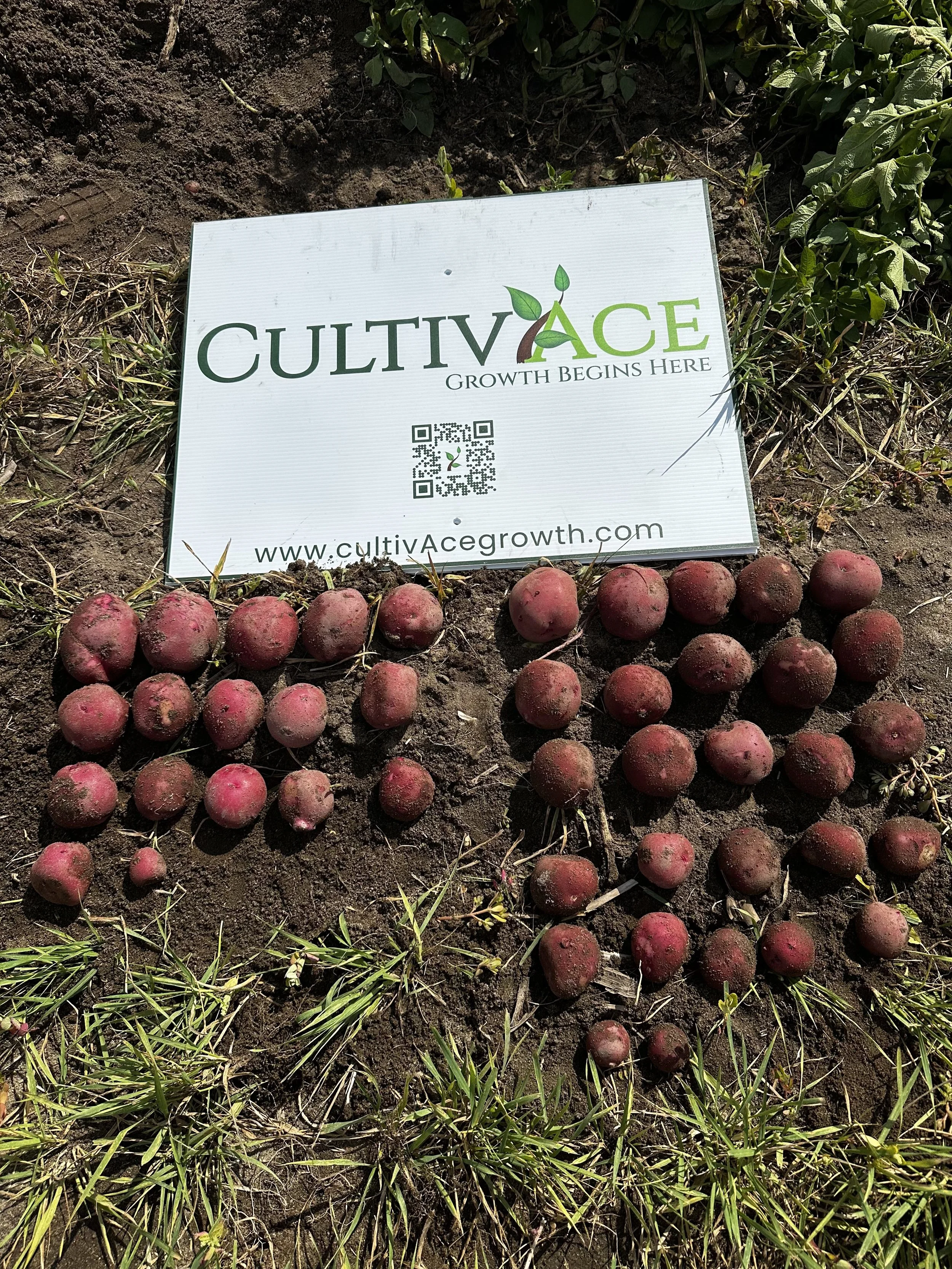
Year two of the Inkster trial is still underway, and full 2026 data hasn't been compiled yet. But the dig photos from this season are already telling a consistent story with what the 2025 numbers showed. In every comparison photo, the PFM™ treatment is on the right, across the same three varieties: Dakota Gold, Dakota Skarlagen, and Red Norland.
The pattern that stands out visually is uniformity. The right-side tubers run more consistent in size, with fewer small, irregular potatoes, the kind that typically get culled or graded down. For a grower, that's not a cosmetic detail. Sizing consistency is one of the biggest factors in what percentage of a load makes top grade versus what gets discounted at delivery. It's the same story the 2025 numbers told: more usable yield, not just more total tonnage, at a fraction of the gallons per acre.
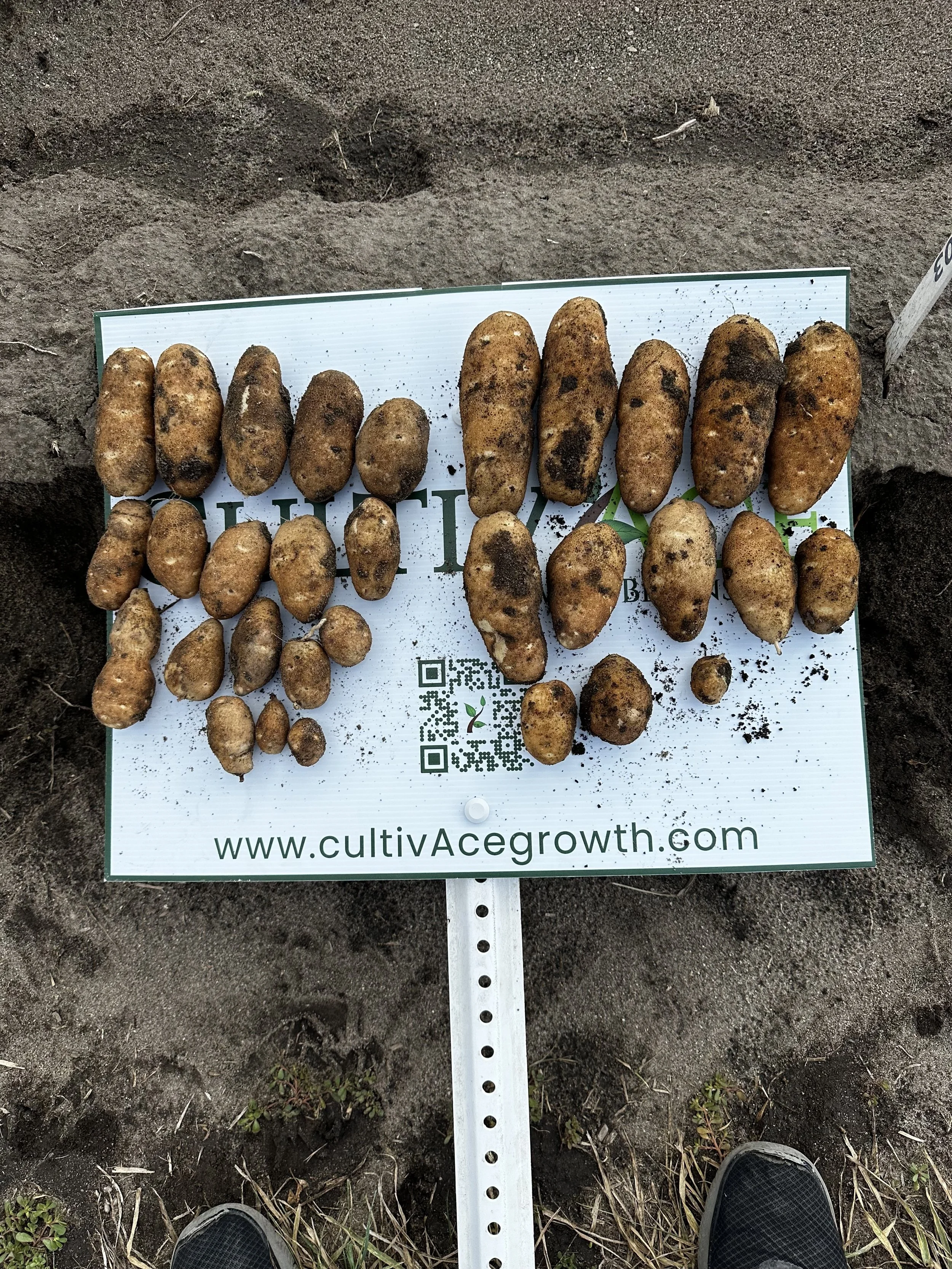
2026 dig. PFM™ treatment on the right
Growers who want to see the full range of trial conditions PFM™ has been tested under, from potatoes to row crops, can browse the complete trial photo gallery for season-by-season comparisons across multiple states and crops.
Why This Matters for Phosphorus Fertilizer Management Beyond Potatoes
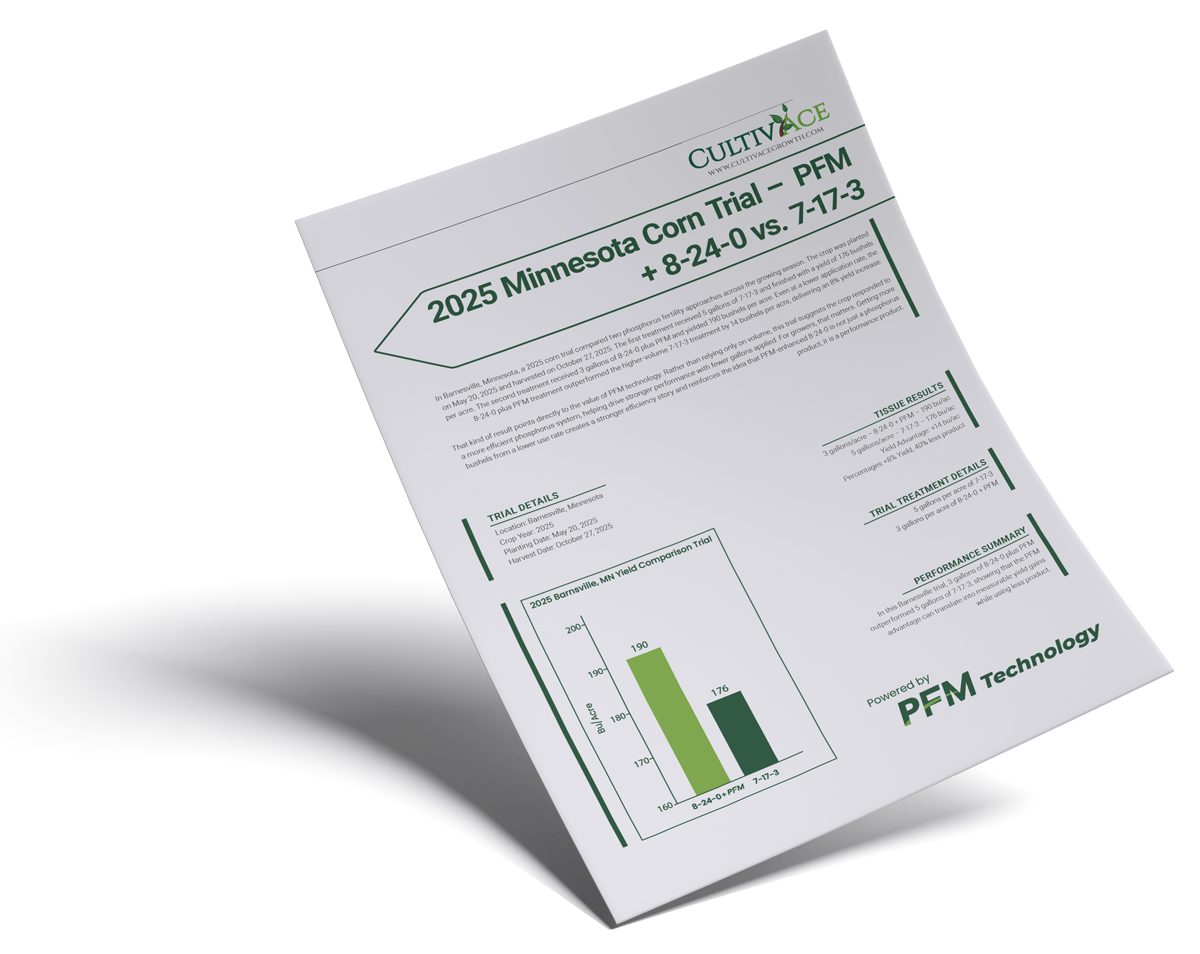
The broader point isn't only about potatoes. Applying more product to compensate for phosphorus that gets tied up in the soil has been the default strategy for decades, because most liquid phosphorus fertilizers weren't formulated to solve the tie-up problem itself. PFM™ represents a different starting point: formulating phosphorus so less of it needs to be wasted covering for conversion lag and fixation in the first place. That's the same principle behind CultivAce's corn starter results, detailed in What is the Right Phosphorus Starter Fertilizer?, where a 2025 Minnesota trial showed a program using 15 percent less P2O5 out yielding a higher-rate standard by 14 bushels per acre.
Whether it's corn, wheat, or potatoes, the question PFM™ is built to answer is the same: how much of the phosphorus a grower pays for actually reaches the plant, and when.
What Comes Next
CultivAce and NDSU will continue the Inkster trial into a third season, with full results published as each year closes. Two years of consistent gains across three potato varieties, using a fraction of the product, is the kind of pattern growers should watch, and CultivAce will keep sharing the data as it comes in.
Growers interested in the full 2025 NDSU trial summary, or in finding a local distributor to get PFM™ into next season's program, can reach out to their CultivAce representative.