
The Delivery Problem with Liquid Calcium Fertilizer
Most growers know a story like this one. A field passes its soil test with no red flags. Early visual inspection shows nothing wrong, no yellowing, no stunted growth. Then somewhere between bloom and fruit set, an early tissue test comes back lower than it should be, and by the time blossom end rot, bitter pit, or cracking shows up in the field, the calcium that should have been in those cell walls during division and expansion already wasn't there. The liquid calcium fertilizer program looked right on paper, but the plant tells a different story.
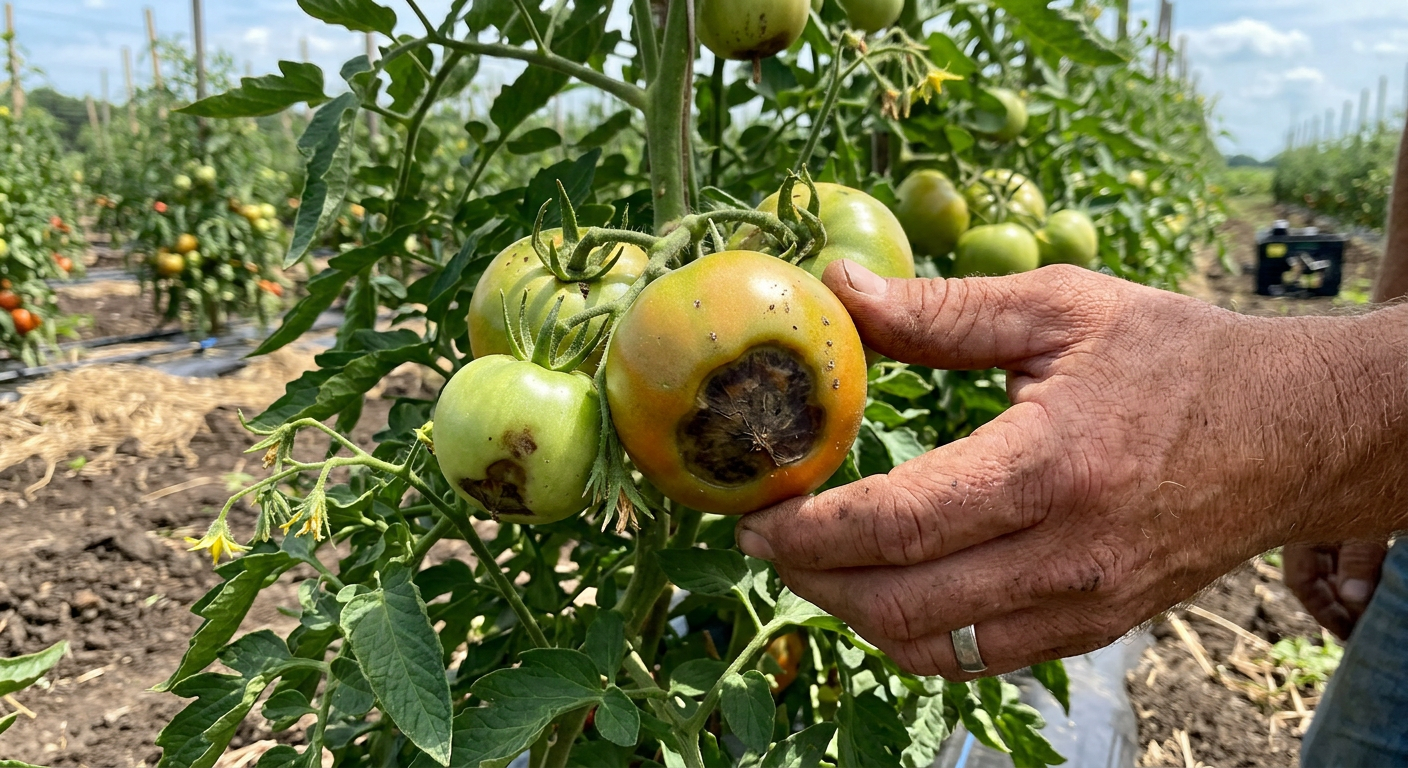
Blossom End Rot on Tomatoes
That's how calcium catches an experienced grower off guard. Soil calcium and available calcium are two different numbers, and the gap between them is often where deficiency lives. By the time the symptoms appear, the window to do anything about that crop has already closed.
The reason is mechanical, not mysterious. Calcium has very limited phloem mobility. It moves upward through the xylem with the transpiration stream and stays largely locked in place once it's deposited in a tissue. Unlike nitrogen or potassium, the plant cannot pull calcium out of older leaves and redirect it to a developing fruit. Whatever calcium arrives during cell division and expansion is what that tissue gets. There is no recovery from a deficient window, only prevention of the next one. This is why the form of liquid calcium fertilizer chosen, and the testing program that drives the timing, matter more than the rate on the back of the jug.
Soil, Water, Tissue, and SAP: The Four Tests You Need
A complete liquid calcium fertilizer program is built on multiple data points, not one. Many growers run a soil test and stop there. That most generally isn't enough information to manage calcium through fruit set and harvest.
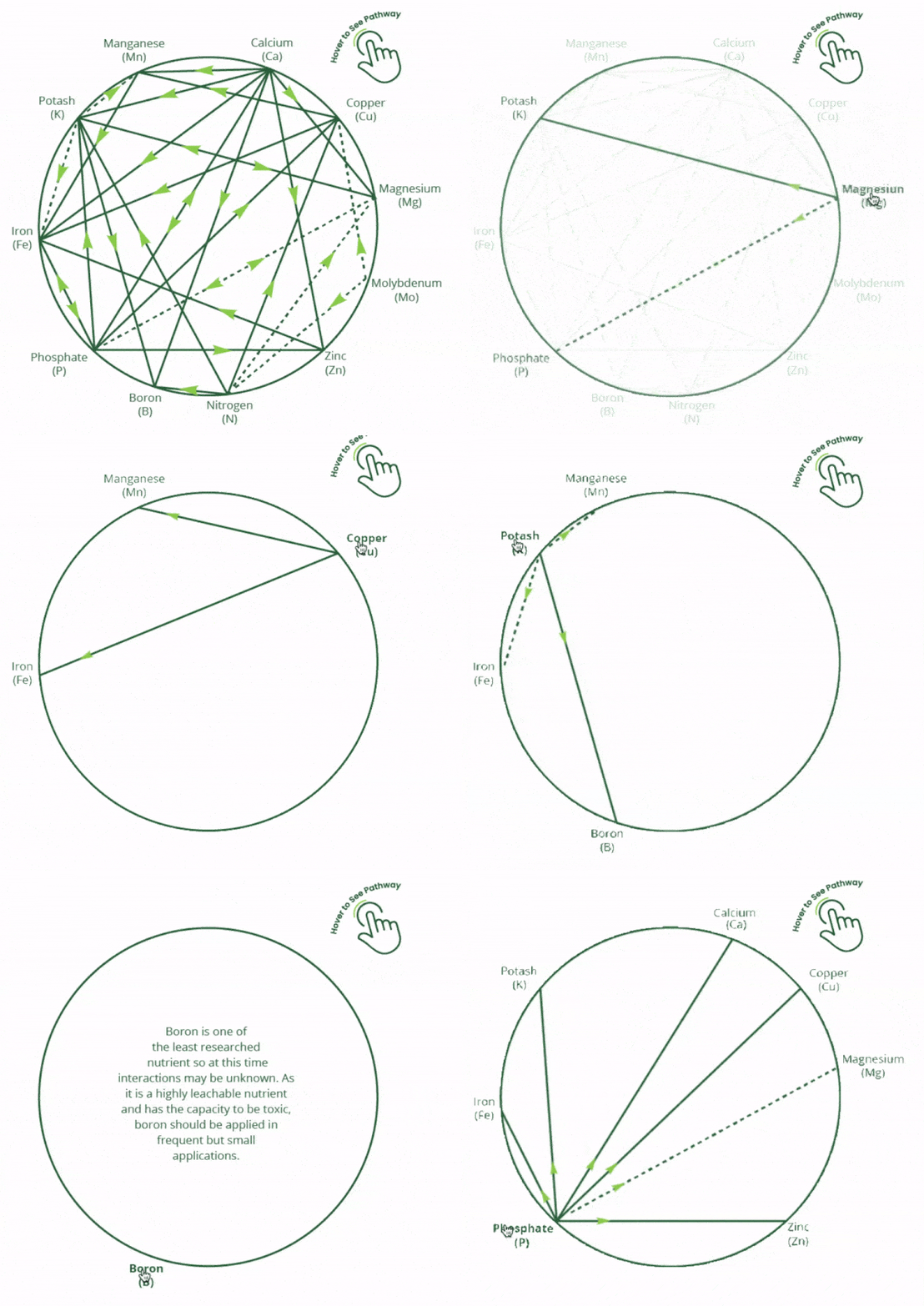
Mulders Chart
Soil tests establish baseline calcium availability, cation exchange capacity, base saturation, and the level of competing cations like potassium, magnesium, and sodium. They show what calcium is potentially available in the rooting zone, not what's actually getting into the plant. A field can test high in soil calcium and still produce calcium-deficient fruit when antagonisms are pushing other cations to the front of the line. Mulder's Chart maps these interactions and is a useful reference for understanding why a strong soil test does not guarantee a sufficient plant.
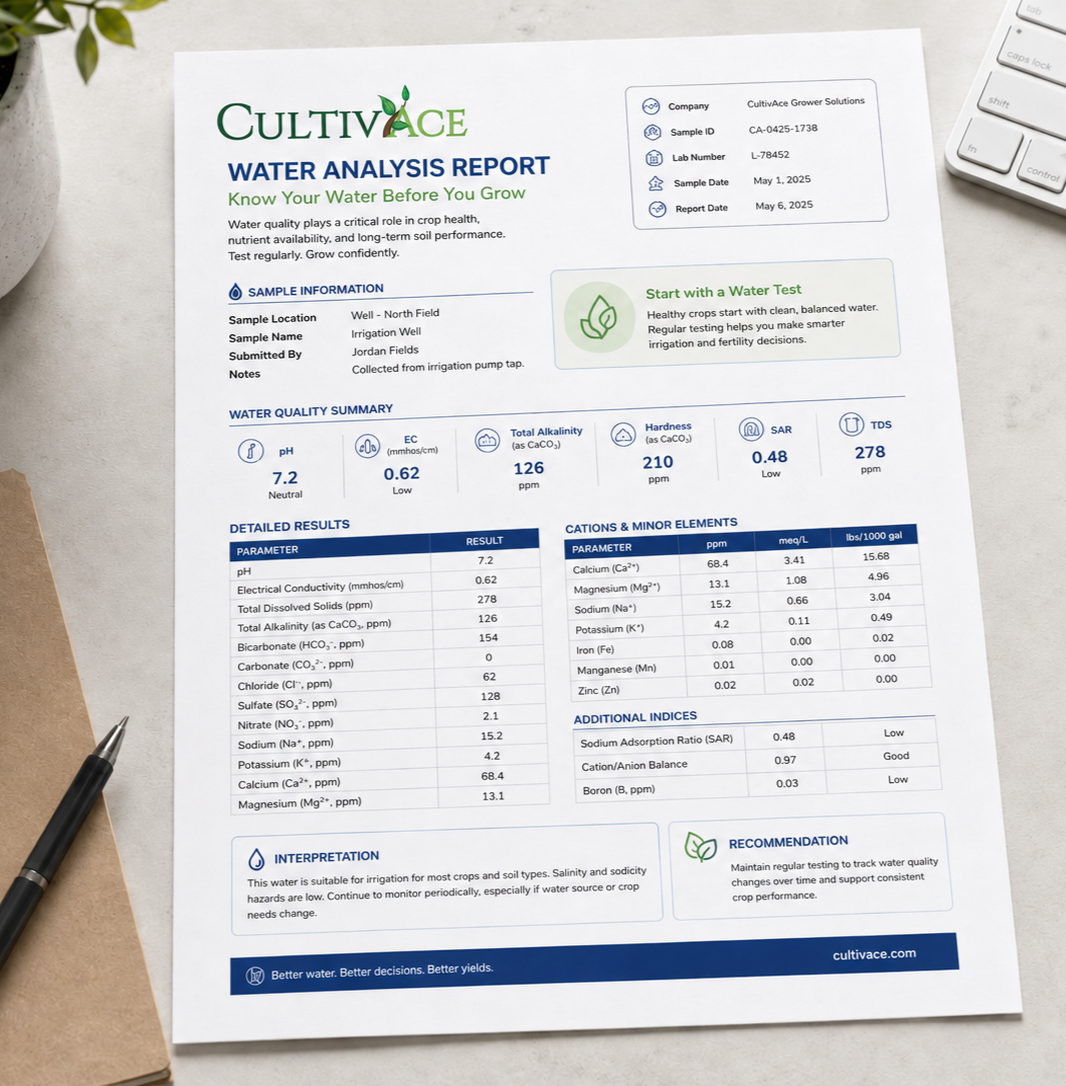
Water tests are the test most often skipped, and the one that affects every foliar application made all season. Hard irrigation or spray water carries dissolved calcium and magnesium that can precipitate with phosphates in the tank, tie up surfactants, or reduce the efficacy of other actives in the mix. Knowing the water profile is the difference between a spray that performs and a spray that flocculates. For fertigation programs, water is already part of the nutrient delivery system whether it gets accounted for or not.
Tissue tests show what calcium has already been deposited in the plant. Petiole samples for grapes, leaf samples for tree fruit and vegetables. These are the data points that drive in-season decisions. Pull them on a schedule, not in response to a symptom. By the time visual deficiency appears, the test is confirming damage already done.
SAP analysis measures the nutrients actively moving in the plant's sap right now, not what was deposited weeks ago. By sampling both new and old leaves and comparing the two, SAP analysis can detect a developing deficiency before it shows up in a standard tissue test, sometimes by two to three weeks. For a phloem-limited nutrient like calcium, that lead time is the difference between a corrective foliar application that lands in the window and one that misses it entirely. SAP testing has become a core tool for growers managing high-value crops where reactive correction is too late and proactive timing is everything.
The growers who manage calcium well aren't testing more often by accident. They test because the cost of guessing is higher than the cost of the lab fee.
Why the Carrier Molecule Determines Uptake
Not all liquid calcium fertilizers behave the same once they hit a leaf surface. The calcium ion is identical regardless of source. What differs is the molecule it's bound to, and that molecule determines whether the calcium ever crosses the leaf cuticle.

This is the foundation of our AFN™, Acetate Foliar Nutrition Technology. The acetate ion is small, neutral at leaf-surface pH, and metabolically familiar to the plant. Once inside, it enters cellular metabolism directly through the acetyl-CoA pathway. The intact calcium acetate molecule crosses the cuticle more efficiently than larger, charged, or chelated complexes that have to dissociate before they can be absorbed.
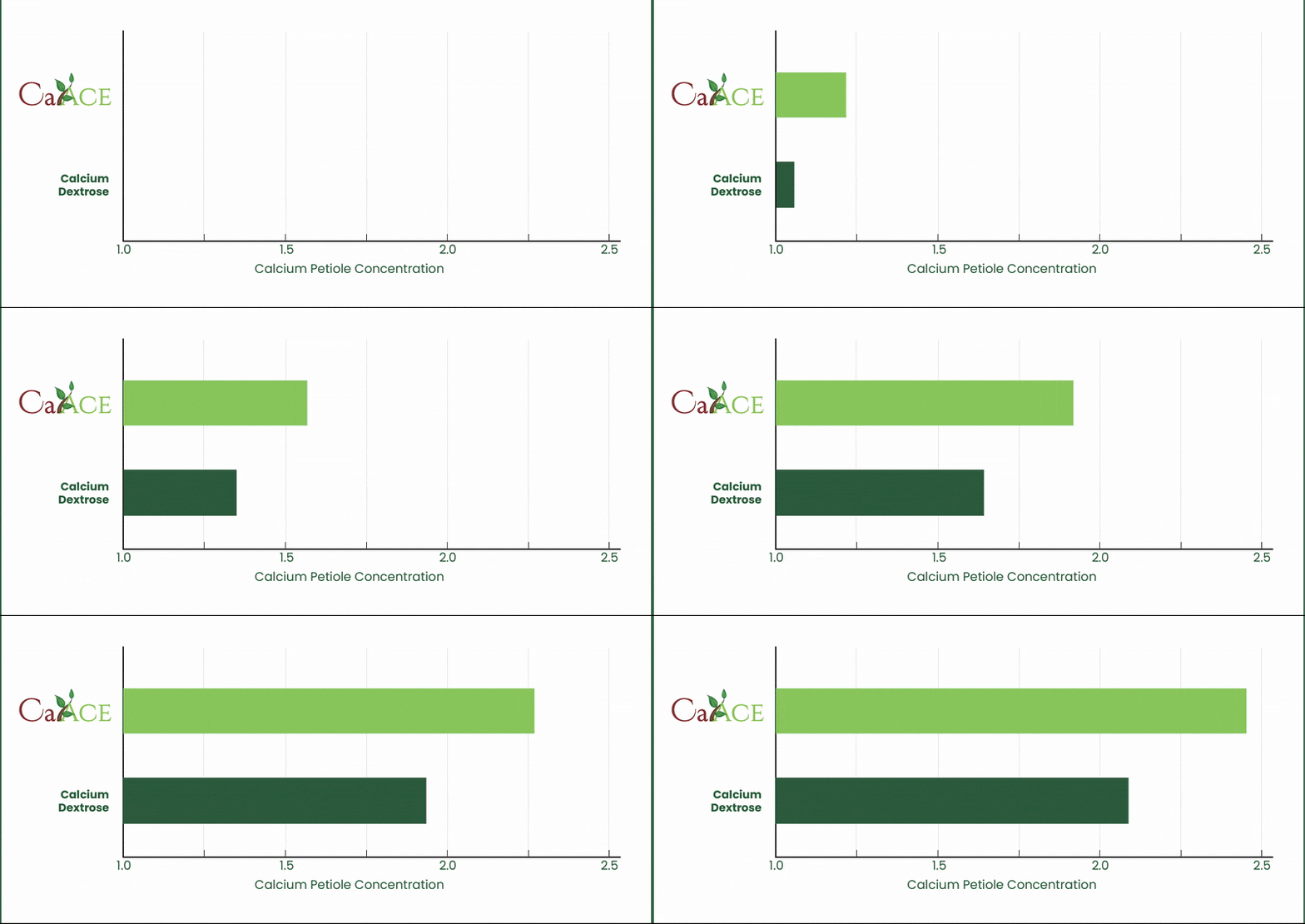
+13.61% Ca Concentration
The trial data supports the mechanism. In a 2025 Bakersfield, California grape trial, CaAce (5% Calcium Acetate) was applied at 1 quart per acre across four foliar applications and compared head-to-head against a leading calcium dextrose product at the same rate. Petiole tissue samples showed CaAce delivered 13.61% greater calcium concentration than the dextrose treatment. Same rate, same schedule, different carrier, different result in the tissue.

+17% Ca Tissue | +25.6% B Tissue
A separate 2025 Salinas, California strawberry trial compared CaAce+B (5% Calcium Acetate + 0.5% Boron) against a 9.5% calcium EDTA product.
The acetate-based application produced 17% higher tissue calcium and 25.6% higher boron in samples collected one week after application, with increases measured across other nutrients as well. Acetate is functioning as a broad uptake carrier, not just a calcium vehicle.
This is why label percentage alone is a poor way to compare a liquid calcium fertilizer. The number on the label only matters if the calcium gets into the plant.
Calcium, Cell Walls, and Shelf Life
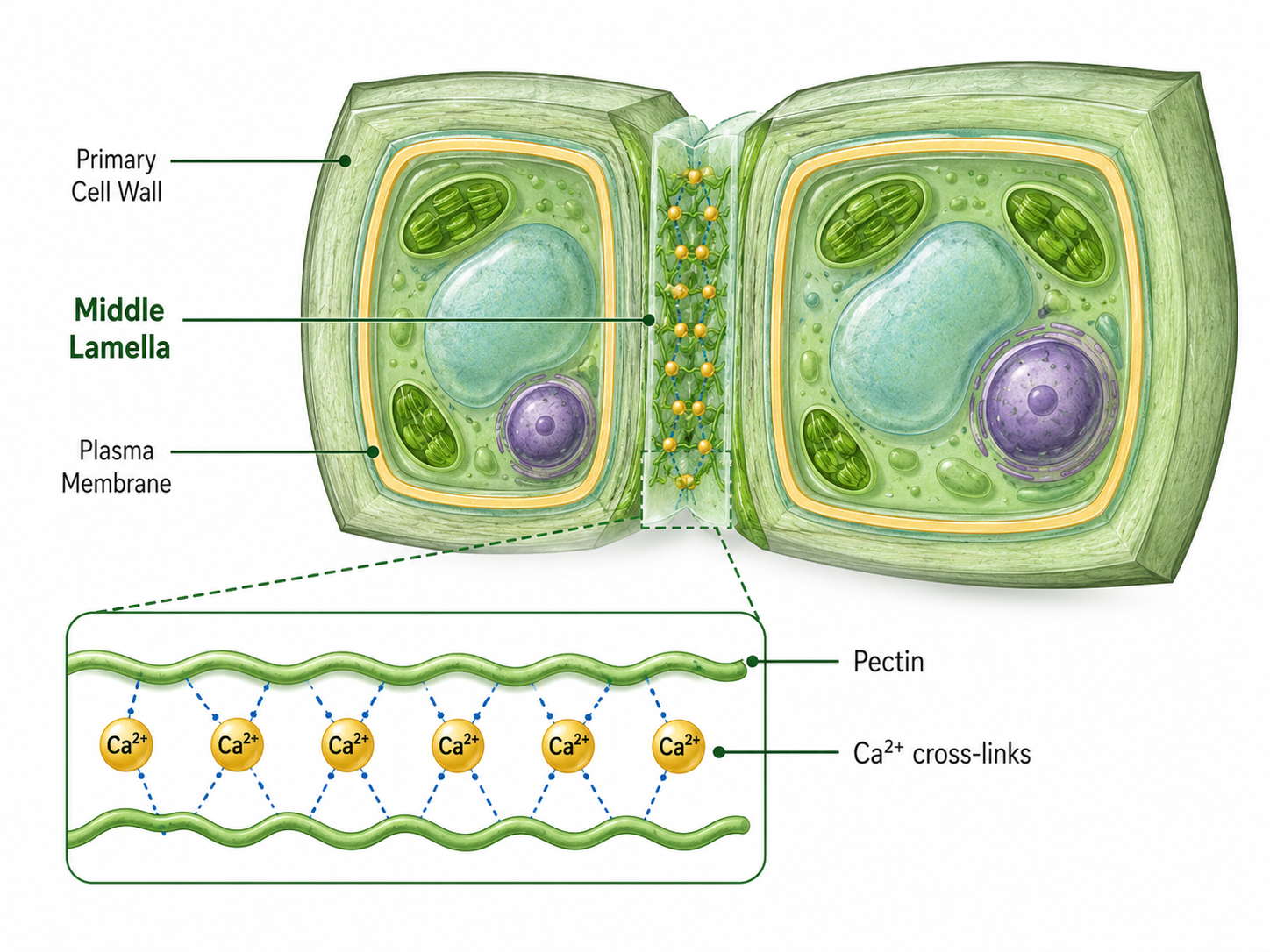
Calcium's primary structural role in plants is in the cell wall, where it cross-links pectin molecules in a structure called the middle lamella. These calcium-pectate bonds are what give cell walls their structural integrity. When calcium is adequate during cell division and expansion, the resulting cell walls are stronger, more uniform, and better able to handle stress, including the rapid water uptake that splits cherries after rain, or the mechanical handling that bruises soft fruit.
This is also why calcium directly affects shelf life. Post-harvest softening is largely a function of pectin breakdown. Fruit with stronger calcium-pectate cross-linking softens more slowly, holds firmness longer, and resists the pathogen entry that follows tissue breakdown. The shelf life benefit is not marketing language. It is a structural consequence of cell wall composition that gets built during fruit development, not at harvest.
CultivAce's 2013 Rainier cherry trial demonstrated this clearly. Repeated pre-rain foliar applications of calcium acetate reduced cracking in a treated block to negligible levels while predictable cracking occurred elsewhere. The cell walls were built right, so they held when they were tested.
When Calcium and Boron Make Sense Together
Bloom and early fruit set are when CaAce+B earns its place in the program. Calcium and boron are both structural components of cell wall pectin, and boron is independently required for pollen tube growth and pollen viability. Applying both together during the reproductive window addresses two interconnected demands in a single pass, supported by the same uptake advantage acetate provides for calcium.

For programs that need a higher analysis or a different chemistry, 6% Calcium Citrate is a strong fit. Citrate chelation keeps calcium soluble across a wide range of tank conditions, and at 6% it delivers more calcium per gallon than the acetate line. For certified organic operations, Calcium6 Calcium Carbonateprovides a compliant liquid calcium fertilizer option for foliar or irrigation delivery, best deployed as part of a sustained organic program where soil calcium and supplemental foliar inputs are managed together.
Building the Program
A practical foliar calcium program follows the crop, not the calendar. Pre-bloom is for establishing tissue baseline; acetate forms move fastest. Bloom through early fruit set is where CaAce+B does the work. Through rapid fruit expansion, continue applications every 2 to 4 weeks. A pre-harvest pass 2 to 3 weeks before pick can meaningfully improve firmness and post-harvest performance.
Rates run 1 to 4 quarts per acre depending on crop, growth stage, and pressure. Tree crops apply in 50 to 100 gallons concentrate or 100 to 500 gallons dilute. Field and row crops, 10 to 40 gallons by ground.
Calcium is not a nutrient you fix after the fact. You build it into the program before the deficiency shows up. The growers who do this, testing soil, water, and tissue, choosing a liquid calcium fertilizer form matched to the crop stage, applying on a schedule that anticipates demand instead of reacting to symptoms, are the ones whose fruit holds firmness through pack and ships clean.