
A Christmas Carol for Copper: Why Copper Acetate Foliar Fertilizer Deserves a Place in Your Fertility Program

As winter settles in and fields rest under frost or snow, it’s the season for reflection. This holiday season, it’s worth revisiting copper’s role in crop performance and why copper acetate foliar fertilizers have become a modern solution for efficient, precise copper nutrition. For example, in Charles Dickens’ A Christmas Carol, Ebenezer Scrooge learned that ignoring small but essential responsibilities can quietly lead to much larger problems. While Scrooge had to face three spectral visitors due to his neglect of those around him, when we focus overtly on macronutrients and neglect the plants' needs for micronutrients we have to face the spirit of what our yield could have been.
Copper may be a micronutrient, but overlooking it can haunt a fertility program long before yield maps tell the full story. This holiday season, it’s worth revisiting copper’s role in crop performance and why copper acetate has become a modern solution for efficient, precise copper foliar fertilizer nutrition.
The Ghost of Copper Past: Why Crops Still Need Copper
Copper has always played a central role in plant health. It activates enzymes, supports photosynthesis and respiration, and drives protein synthesis along with carbon and nitrogen metabolism. While copper is often overlooked these processes are vital for crop growth production.
When copper availability is low, crops often show stunted growth, poor pigmentation, weak reproductive development, and delayed maturity. In grain and seed crops, copper deficiency can quietly reduce grain formation. In tree fruit and nut crops, it can cause dieback of terminal shoots that affect productivity for years to come.
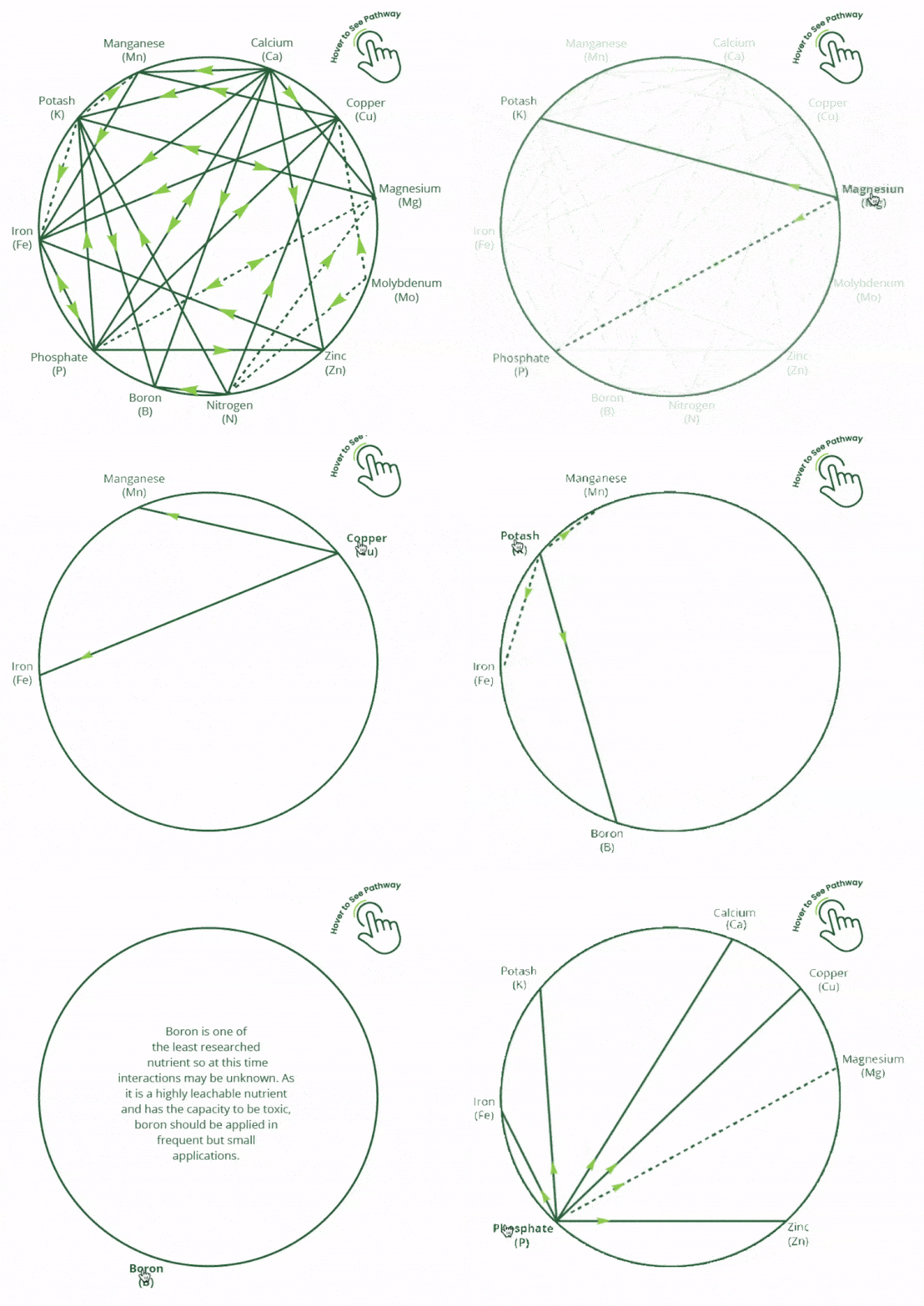
Copper availability is also shaped by nutrient balance. Mulder’s Chart shows that excess nitrogen, phosphorus, and molybdenum can suppress copper uptake, allowing functional deficiencies to develop even when copper is present in the system.
Much like the lessons of Christmas past, copper deficiencies are rarely new problems, they’re recurring ones, often repeated season after season because they’re underestimated or misunderstood.
The Ghost of Copper Present: Why Deficiencies Still Appear Today
Modern fertility programs, while highly productive, can unintentionally create copper challenges. High nitrogen rates increase plant demand for copper. Soils high in organic matter or calcium often bind copper tightly, making it unavailable to crops even when soil tests suggest adequate levels.
The result is a present day paradox: copper is there, but the plant can’t access it.

This is where our copper acetate foliar fertilizer, CuAce, has become such an important tool. Foliar applications bypass soil conditions that can cause tie up and deliver copper directly to the plant when your crops precisely need them. When crops need copper, they need it now, not next season, foliar delivery becomes a fast, effective, and reliable way to apply.
Copper Acetate: A Modern Solution with a Gentle Touch

Not all copper foliar fertilizers behave the same way. Copper acetate stands out because it delivers copper in a highly available, plant-available form that is well suited for foliar uptake. Copper acetate is derived from acetic acid, a substance that plants recognize, create, and release as plant root exudates. Acetate fertilizers carry a small molecular weight and as a result are highly absorbable through the leaf surface. On the other hand products like copper EDTA have a molecular weight that is much higher than copper acetate and as a result of the high molecular weight compete against the aqueous pores of the leaf surface leading to lower uptake. Copper acetate carries a much lower risk of phytotoxicity than copper sulfate, which anecdotally has been known to defoliate almond trees in California.
In the spirit of Christmas present, copper acetate reflects a shift toward efficiency and innovation, delivering a vital nutrient when our crop needs it.
Its compatibility with other foliar nutrients and crop inputs in the spray tank also makes copper acetate easy to integrate into existing spray programs, reducing extra passes and improving overall nutrient efficiency.
The Ghost of Copper Yet to Come: Yield Depends on Balance

Dickens’ tale reminds us that future outcomes are shaped by today’s choices. In agriculture, copper is often the unseen link between strong fertility programs and disappointing results.
Copper plays a direct role in reproductive success. It supports pollen viability, grain and seed formation, and fruit development. In legumes, copper contributes to nodulation and nitrogen fixation, influencing both yield and nitrogen efficiency. When copper is deficient these processes suffer and we can easily overlook them if we are focused on other crop production issues. Copper also plays a role in plant elasticity and can be used to prevent fruit cracking in cherry production.
Our copper acetate foliar fertilizer offers a proactive way to protect yield potential before problems become irreversible. Applied at the right time and rate, it helps ensure that vital plant functions occur without a hitch.
A Season of Better Decisions
A Christmas Carol ends with transformation and small changes that lead to lasting improvement. Copper nutrition works the same way. Paying attention to copper, choosing the right formulation, and applying it efficiently can have an outsized impact on crop health, yield stability, and return on investment.
As you plan fertility programs for the coming season, consider whether copper has been treated like a forgotten stocking stuffer or whether it deserves a more intentional place at the table. With copper acetate foliar fertilizer, growers have a modern, precise tool to ensure copper supports crops today, tomorrow, and well into the future.
After all, in both farming and Christmas stories, it’s often the smallest details that make the biggest difference.
A visitation from two trials
Scrooge faced 3 ghosts that helped him come to the realization that he needed to change his ways. This was before the era of cell phones and the internet so the audience that Dickens was tailoring his message to had more time and patience to digest it. In the spirit of our fast paced day and age I have shortened the message by 33%.
Instead, I am offering up two trials that demonstrate the effectiveness of copper acetate as a copper foliar fertilizer. One is an on farm trial that demonstrates, based on sap analysis, that copper acetate was able to increase copper levels by over 1000% (an insane number and something that I myself was shocked to see).

In an on-farm hazelnut trial conducted in Newberg, Oregon, copper deficiency was confirmed through sap analysis prior to application. After a single foliar application of CultivAce CuAce at 2 quarts per acre, follow-up sap tests showed copper levels increased dramatically in both young and old leaf tissue, rising by more than 1,000 percent in a matter of days. The trial highlighted how quickly copper acetate can correct deficiency and deliver copper efficiently when timing and uptake matter most.
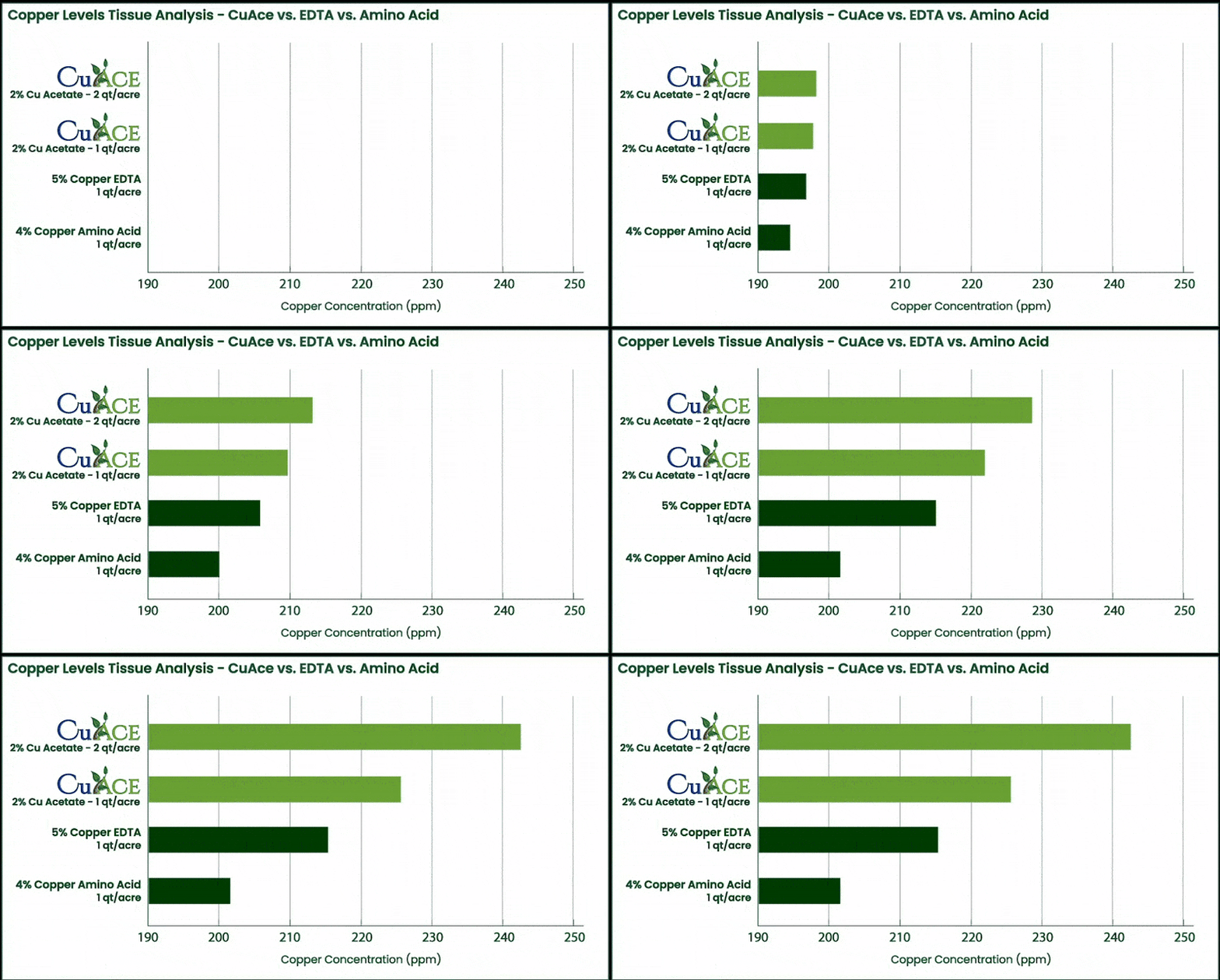
The other is a recent trial that saw CultivAce CuAce, our copper acetate foliar fertilizer go head to head and win against Copper EDTA and Copper Amino Acid. This was a separate third-party trial in California evaluated CuAce alongside copper EDTA and copper amino acid sources in a randomized block design. Tissue samples collected three days after application showed CuAce delivered higher copper concentrations at both 1- and 2-quart foliar rates, outperforming the standard chelated forms.
Like Scrooge’s moment of clarity, the outcome reinforces how small changes in form and delivery can create meaningful differences in performance. These results reinforce how small changes in nutrient form, especially during critical windows, can lead to meaningful differences in copper uptake and overall performance.